Showing posts with label Greater Manchester Digital Hearing Aids. Show all posts

Tuesday, 14 May 2013

Digital Hearing Aids Eccles – Greater Manchester Digital Hearing Aids


Digital Hearing Aids Eccles –  Greater Manchester Digital Hearing Aids

Literally just under 50 miles from Stoke on Trent, the home of Digital Hearing Aids and a mere 3.5 miles from the centre of Manchester is Eccles.  It’s part of the City of Salford and has a strange name!

How the name came about is uncertain but one popular thought is that is comes from the Latin Ecclesia meaning Christian church.  This of course dates back to the period when Britain was invaded by the Romans; the Anglo-Roman abbreviation of Ecclesia was Ecles or Eglys is thought to be the direct derivation.  Once the Anglo-Saxons arrived some place names stayed the same.  Ecles however had been used as part of several village names.  Eccles possibly derives from the original Ecles which is understood to have meant a building or site recognised as a church by the Anglo-Saxons.

Did you know?
Hearing loss can be caused by a number of conditions from earwax build-up to deterioration due to age.  We operate a service where a professional audiologist can measure the hearing loss in both ears with a simple test.  This helps to diagnose the reason and the amount of deterioration.

We can arrange for an audiologist to visit your home or make an appointment for you to visit us at our Midlands offices.  Both options are free of charge and need no commitment beyond the appointment from you.

So if you would like to arrange a visit or appointment or would just like to know more please get in touch on 01782 698090.

Eccles cakes
The first Eccles Cake was baked in Eccles in the late 18th Century.  It’s a combination of flaky pastry, butter, nutmeg, sugar, candied peel and currants.  The first person known to sell them was James Birch though there is no knowledge as to whether he actually invented the recipe.  His shop on the corner of Vicarage and St Marys Roads (now Church Street) was the first place to sell them.


{Information |Description=A freshly baked Eccles cake, taken in Bettys cafĂ©. |Source=Myself. |Date=30th May 2006 |Author=Sean Whitton (User:Xyrael) |Permission="I release this work under the licenses noted below." }} 


Eccles cakes are sometimes called squashed fly cakes because of the appearance of the currants.  As there is no protection of where these cakes can be produced you might find them anywhere in the world.

The church
With a name that represents church in earlier languages, it’s not surprising to find that the town grew up around the St Mary’s Church.  Of course this is also the case for many English towns and villages as the church was the centre of communities in days gone by.


{{Information |Description={{en|1=The parish church of St. Mary, in Eccles, Greater Manchester.}} |Source=Own work by uploader |Author=Parrot of Doom |Date=16 February 2009 |Permission= |other_versions= }} <!--{{ImageUpload|full}}


St Mary’s Church wasn’t built until 13th Century much later than Roman and Anglo-Saxon occupation.  In the 1960s English Heritage designated it to Grade II listing and it has since achieved Grade I standing.

The local economy
Agriculture was the early occupation and economy of the area, probably oats and barley.  There were some local cottage industries taking place during the medieval period.  These were likely to have included blacksmithing, thatching, butchering, basket weaving, skinning, tanning and weaving.

During the 18th Century the textile industry began to have an impact.  Many of Eccles’ folks worked at home as weavers with two Manchester Mills supplying the work.  Early in the following century the majority of the population of Eccles was employed in the textile trade mainly in cotton mills.  As the century progressed two silk mills opened in Eccles and one in nearby Patricroft.  Many of the mill workers were children under twelve.

At around the same time industrialist James Nasmyth visited the Liverpool and Manchester Railway and set up his own foundry here.  He invented the steam hammer which allowed him to produce locomotives here at a speed not known beforehand.  His Bridgewater Foundry stood close to the railway and the Bridgewater Canal.  It carried on production from this time until the 1940s.  The buildings that remain are a part of the Business Park which now occupies the site.  All that is left of the foundry is one of Nasmyth’s steam hammers.


== Summary == {{Information |Description=Nasmyth steam hammer |Source=From [http://www.geograph.org.uk/photo/143999 geograph.org.uk]; transferd by User:ClemRutter using [http://toolserver.org/~magnus/geograph_org2commons.php geograph_org2commons]. |Da


As with many other places, the arrival of the railway and the canals, both the Bridgewater and the Manchester Ship Canals, Eccles thrived.  More housing was built to accommodate workers for the factories.

At the end of the 19th Century the Barton Swing Aqueduct was built.  This carried the Bridgewater Canal over the Manchester Ship Canal.  Small narrow boats can use the aqueduct on the Bridgewater Canal whilst it can move out of the way to allow larger ships to pass on the Manchester Ship Canal.  It is considered a great feat of Victorian engineering and is Grade II listed.

Famous people from the area
As Eccles is part of the City of Salford some of the famous names are attributed to the larger city.

However we do know that John Moores founder of the Littlewoods Business Empire including the retail branch of Littlewoods and the John Moores Football Pool was born here.  He gave up the chairmanship of the business in favour of his brother in 1960 so that he could become director of Everton Football Club.  He was knighted in 1970 and spent the last few years of his life in a wheelchair after prostrate troubles.  His estate following his death in 1993 was valued at more than £10 billion.  Liverpool Polytechnic took the name of Liverpool John Moores University when it was granted the status in his honour.

Film director Mike Leigh known for his gritty script-less films and plays was brought up in the area.

Actor Robert Powell best known for his film roles as John Hannay (The 39 Steps) and Jesus of Nazareth in the film of the same name and Mark Williams in the TV series Holby City comes from here.

As does Russell Watson a Classical English tenor who found fame in popular music.


{{BotMoveToCommons|en.wikipedia}} {{Information |Description={{en|Russell Watson 2007 - Broadlands Hampshire England Image: Peter French at Flying Tigers Studio www.flyingtigers.co.uk}} |Source=Transfered from [http://en.wikipedia.org en.wikipedia] Trans


Manchester United player Ryan Griggs has lived in the area since he was six years old.

The creator of Coronation Street Tony Warren hails from the area.

Journalist and broadcaster Alistair Cooke most famous for his radio programme Letter from America was also from the area.

Allan Clarke was the original singer with the 1960s pop group The Hollies.

Graham Nash singer/songwriter with 1960s/70s band Crosby, Stills, Nash & Young comes from the area.

Suffragette Emmerline Pankhurst also hails from the area.  She founded of the Women’s Social and Political Union and was instrumental in winning the vote for women.

Current residents of Eccles ...
... lend me your ears.  In a manner of speaking that is.  If your hearing is failing you and you’d like to help to hear better, get in touch with us either via our online form or by calling us on 01782 698090.

Wednesday, 8 May 2013

Digital Hearing Aids Sale –Greater Manchester Digital Hearing Aids


Digital Hearing Aids Sale –Greater Manchester Digital Hearing Aids

When a large sprawling city like Manchester continues to expand you will find a host of suburbs – like satellite villages – scattered around the larger conurbation.  Sale is just over 5 miles from the heart of Manchester and is one such ‘village’.  Not surprisingly it serves as a commuter town for Manchester.

Until the reorganisation of boroughs, Sale was in Cheshire which again goes to show how Greater Manchester is spreading.  It wasn’t always so for Sale.  Originally Sale was a ‘township’ linked to nearby Ashton upon Mersey by a shared church.

Life began in Sale in Roman times as far as we know and was then developed by the Anglo-Saxons.   In fact township is typically Anglo-Saxon as is the name Sale.  It derives from the ancient English Salh meaning ‘next to the sallow tree’.  A sallow tree is a Willow.  Part of the old Roman road joining Chester and York runs through Sale and 46 Roman coins were found in Ashton upon Mersey some years ago.  There is no official mention of Sale anywhere until the 12th–13th Centuries, after the Domesday Book.


Sale and Ashton upon Mersey were rural agricultural towns producing enough fresh veg and corn to support them and farming cattle, which were sold to the lords of the local manors.  Like the development of many parts of this area, it was the arrival of the railways and the canals that changed everything.  Once the railways were built in the 19th Century, Sale became a popular place of residence for the middle class business men who could by then afford to move out of Manchester.  As Sale grew, it swallowed up Ashton upon Mersey which is now a district of Sale.

As well as agriculture as Sale’s main source of income, the area was known for producing ‘Garthweb’, a woven material used to make girths to keep horse saddles in place.  In latter years Sale’s economy relies mainly on service industries.

Friends, Romans or Sale locals and countrymen ...
... lend me your ears or your ear-trumpets!  Actually if hearing our call is difficult then all the more reason to read on.  Many of us suffer with failing hearing as we age but it isn’t only the older generation who suffer this way.  Hearing impairment can be caused by simple things such as earwax to continual exposure to very loud noise and age-related problems.  Whatever the cause, we are in the position to help you to improve your hearing.  If you’d like to know more, take a look here and then get in touch on 01782 698090.

Sale Sharks and the oldest rule book
We know Sale is near the Mersey but we are not aware of any sharks being spotted.  That’s unless you’re talking about the rugby kind!  Sale has one of the oldest Rugby Union Football Clubs in the country.  It dates back to 1861 and holds the oldest book of rules of the game still in existence.  This dates from 1865.

Sale Rugby Union Football Club is an amateur club playing at the Heywood Road grounds in the town.  The grounds are also used by two other clubs: Ashton upon Mersey and Trafford Metrovick Club.  Sale Sharks is the professional arm of Sale Rugby Union Football Club who still use the ground to practice, even though Stockport is their ‘home’ ground now.

The Sharks are renowned for bringing on a number of players in their junior team the Jets.  These include England players Steve Hanley, Mark Cueto, Dean Schofield, Chris Jones, Andy Titterell, Charlie Hodgson and Jason Robinson.  Many went onto to play for the Sharks too.


People of note connected to Sale
With its close proximity to Manchester it isn’t surprising that Sale had many connections with a number of famous or notable people over the centuries.

One of Sale’s earliest recorded connections is to John Collier a caricaturist and satirical poet who went by the name of Tim Bobbin

18th Century physician Dr Charles White founded the Manchester Infirmary.  He lived in Sale

John Brogden was a 19th Century industrialist who had experience in the coal and iron mining businesses and in cleansing.  He lived in Sale and was a contractor for the construction of the local railway bringing growing prosperity to the town

Businessman and banker Samuel Brookes owned nearly 25% of Sale during the 19th century

Samuel was closely followed by his son William who inherited his land in Sale and became MP for Altringham

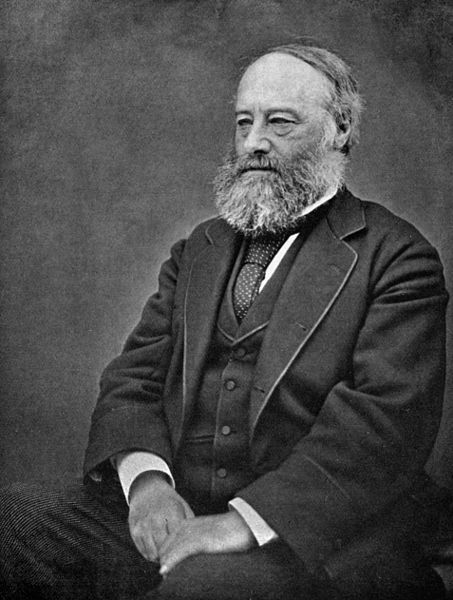
James Prescott Joule moved to Sale later in life.  He is known for developing the ‘first law of thermodynamics’


Born in Ashton upon Mersey William Stanley Houghton became one of the Manchester School of playwrights.  His best known play was Hindle Wakes, the story of a mill worker who embarks on a ‘dirty weekend’, which caused quite a stir in its time

Meanwhile author Dodie Smith grew up here.  She is most famous for writing The Hundred and One Dalmatians.  She also took a turn at acting in her early career and published other novels including the charming ‘I Capture the Castle’

Lancashire CC and Cambridge University cricketer Joseph Makinson lived here in his later years; as did Cyril Washbrook who played for England and Lancashire CC.  William Taylor who played for Worcester County Cricket Club was born here

Famous Oscar winning screen writer Robert Bolt was brought up in Sale.  Two of his most famous screen adaptations are Doctor Zhivago and A Man for All Seasons.  He also collaborated on the screenplay for Laurence of Arabia supplying most of the dialogue

Peter Tinniswood made a name for himself as a comedy script writer for TV and radio and also for authoring a number of cricket-based novels.  He is well known for his work on ‘That Was The Week That Was’, ‘The Frost Report’ and ‘The Dick Emery Show’ amongst others all for TV

Another local is Marc Riley who presented the Radio 1 Breakfast Show and now presents Radio 6‘s evening show.  Did you know he used to be guitarist with The Fall?

Famous singer/songwriter David Grey lived in Sale before moving to Wales as a child

Olympic gold medallist sprinter Darren Campbell was brought up here, as was 800m Commonwealth gold medallist Diane Modahl

Phil Jagielka, the England and Everton footballer was born here


Finally a word for Karl Pilkington who was also born in Sale – he is a writer, producer and actor who has worked closely with Ricky Gervais

Calling all current residents
If you currently reside in Sale you are not a million miles from Castle Hearing Aids in Stoke on Trent.  In fact less than 40 miles and just under an hour’s drive.  So if you are concerned or know that you have a hearing problem, we can help.  You can come to us or we can organise a professional audiologist to come to you.  His tests will show how digital hearing aids can help you.

Don’t hang around, make a call today and we can sort it out in no time at all.  Our number is 01782 698090.

Monday, 29 April 2013

Digital Hearing Aids Cheadle Hulme – Greater Manchester Digital Hearing Aids


Digital Hearing Aids Cheadle Hulme – Greater Manchester Digital Hearing Aids 

Cheadle Hulme is commuter territory.  It is less than 10 miles to Manchester which is the destination for most of the commuters.  Interestingly Cheadle Hulme started life hundreds of years ago as a series of hamlets and unlike most towns and cities wasn’t built around a church.

In the Domesday Book it was part of a large estate which included Cheadle and was valued at just £20.  Although there were signs of Bronze Age settlers and Romans, Cheadle Hulme’s first owner was the Earl of Chester.  In the 13th Century the area became the property of the Chedle family but they took their name from the area not vice versa.  Through the centuries, Cheadle Hulme and Cheadle had a chequered history of ownership.  The estate was split in two hence Cheadle Hulme in the south and Cheadle in the north.

White noise
Fly in your ear?  Or just white noise?  Yes if you’re having trouble hearing us correctly maybe you need some help.  Hearing impairment can be caused by a number of conditions from heredity disposition, ear wax, constant abuse by loud noises and of course deterioration as you age.

At Castle Hearing Aids we can help you identify the cause of your problem with the help of a professional audiologist who will test both ears.  From there we can assess how we might be able to help you further with digital hearing aids.  If you’d like to arrange for a test or learn more, please call us on 01782 698090.

Ancient buildings
Cheadle Hulme has other ancients besides you! Yes some of its buildings go back a long way.  Bramall Hall for instance dates from the 14th Century so it’s little wonder that it has Grade I listing.  (It’s a shame we can’t claim similar credence when we reach a certain age!)


Bramall Hall is a Tudor manor house complete with signature black and white timber frame.  It can be found at the heart of 70 acres landscaped parkland, a conservation area.  The general public are welcomed in both the park and the house.

An area in Cheadle Hulme namely Swann Lane, Hulme Hall Road and Hill Top Avenue also form a conservation area with 16th and 17th Century buildings with timber frames and Victorian homes.  The area also boasts two Grade II listed buildings, Hulme Hall, another timber framed manor house and 1 Higham Street.  The latter was once known as Hill Cottage and is built in a similar style to Hulme Hall, both date from 16th or 17th Century.  Hulme Hall is now a nursing home.

The 17th Century Millington Hall is also Grade II listed.  When you’re looking for it now, you’ll find it renamed as the John Millington pub!


The Kings Hall pub in Station Road only dates back to the 1930s when it was a dance hall complete with stage and orchestra pit.  During the 1960s some of the best know Liverpool bands played here – we wonder which ones?  Now it’s a pub.

Beautiful scenery
There are two main parks in the area.  Oak Meadow Park is in the centre of town and is mainly grass and woodland.  It’s a welcoming space to take a walk or relax in.  Many community projects use the park for annual events.

If you’re looking for somewhere with lots of activities then Bruntwood Park is the place.  The original manor house Bruntwood Hall built in the 19th Century is now offices but the park offers lots of fun activities from an 18 hole pitch and put course to a BMX track, football pitches to kids’ play areas.

War effort
Cheadle Hulme was host to evacuees in the Second World War from both Manchester and the Channel Islands.

RAF Handforth was a supply post during the war making sure that the RAF had everything they needed from knives and forks to engines.

Rich and famous
Cheadle Hulme has been responsible for some famous people over the years:

·         Tim McInnery aka Lord Percy in Black Adder was born in Cheadle Hulme.  Of course he has appeared in many productions apart from Black Adder including films Notting Hill and 101 Dalmatians, TV productions Spooks, Hustle and Dr Who.


·         Actress Kirsten Cassidy is best known for her role as Tania Young in Grange Hill.  Before that her roles were mostly in the theatre – Wind in the Willows, Our day Out and The Sound of Music.  She can now be seen appearing in Coronation Street.  She is playing a sixth former known for her flirting.


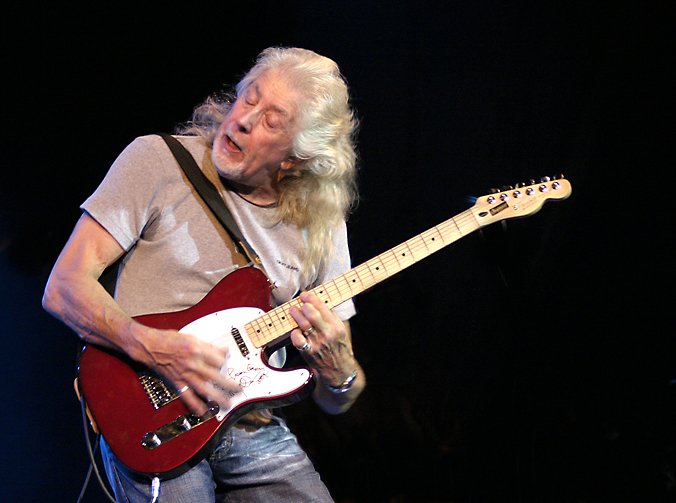
·         In 1933 John Mayall was born here.  He was later to become a blues singer and self-taught guitarist, pianist and harmonica player and went onto to have a prolific recording career which started in 1965 until the present day.  Over the years he has worked with other famous names including Eric Clapton, Peter Green, Mick Fleetwood and Mick Taylor.


·         Mathematician Patrick du Val who was born in 1903 was a sickly child and was mostly home-schooled.  Later he was accepted at Trinity College Cambridge where he studied for a PhD.  His model of algebraic  geometry the ‘du Val singularity’ was named after him.


·         Violinist Jennifer Pike won the title of Young Musician of the Year when she was twelve years old.  After this achievement she went onto play at a number of major venues.  She won a scholarship to the Guildhall School of Music and Drama.  She is currently attending Lady Margaret Hall, Oxford studying – you guessed - music.


·         Cheadle Hulme is also the birthplace of the founder of the Women’s Royal Air Force, Felicity Peake.


Which bands did you hear?
Did you see and hear the Beatles play in Cheadle Hulme in the 1960s?  Or was it The Searchers or the Merseybeats?  Bet you hearing was up for it then.


If now your hearing ain’t what it used to be, don’t suffer in silence, get in touch with us.  Remember we can organise an audiologist to come out to you to test your ears or of course you can come to us.  You can email us via the website or give us a call on 01782 698090.

Thursday, 18 April 2013

Digital Hearing Aids Altringham – Greater Manchester Digital Hearing Aids


Digital Hearing Aids Altringham – Greater Manchester Digital Hearing Aids 

A mere 8 miles south west of Manchester you’ll find Altringham which is now an affluent commuter market town.

It seems there has been life in Altringham, or at least where the town now sits, since prehistoric times.  Neolithic arrowheads have been found there.  Also part of a very important Roman road that linked Chester to York runs through the Broadheath district of the town.


Altringham got its market charter once the Normans invaded Britain. There is no mention of the town in the Domesday Book but the area was ‘owned’ by Hamon de Massey.  He granted the borough a free charter for a market at the end of the 13th Century.  This is the first official mention of Altringham – or Altrincham as it was spelt then – in any records.  It is very likely that Massey established the market and planned the town as a way of collecting taxes.  It was unusual to find planned market towns at this period in history.

Like many other towns in the area, Altringham originally relied on agriculture as its main source of income.  At the beginning of the 19th Century the textile industry had a presence in the area and Altringham had four cotton mills, however these were soon lost to other areas nearby.


By the beginning of the First World War Altringham had established a thriving industrial area in Blackheath.  Companies mainly focusing on heavier industry such as the Budenberg Gauge Company, Tilghmans Sand Blast and the Linotype and Machinery Company established their businesses here.

History lives on
The Old Market Place in Altringham is probably the site of the original town.  The area has several part timber framed buildings and is now a conservation area.  In fact ten of the 21 conservation areas in Trafford are in Altringham. That’s quite some count.

Altringham used to have a Buttermarket too.  This seems to have been a very important place in the local community.  It was used as a place of justice; there was a courtroom above the market and stocks and a whipping post here were all used to keep order.  In front of the market there was also a market cross where local couples made their declarations of love and their intentions official – a sort place of engagement.  Unfortunately the Buttermarket ceased to exist during the 19th Century.  The town lost a real historic treasure.  Local traders reinstated a whipping post and stocks in the 1990s to attract tourists.

The Old Market Place was where the ancient market was held.  Nowadays a market is still held every Tuesday, Friday and Saturday in the listed Market Hall which was built in 1930.  There are other markets held here at other times – a Farmers  Market, a craft market and an antiques market.

Did you know?
In the 1830’s a man sold his wife here for the equivalent of 7.5p.  He believed this was completely legal as long as he provided a halter to go over her head!  Charming!

This probably wasn’t quite as strange as it sounds.  Thomas Hardy’s The Mayor of Casterbridge starts off with a ‘wife sale’.  He wrote this book in the 1880s.  Thank goodness times have changed.

What did you say?
Eh did you hear that right?  Yes you did!  Selling your wife or husband in the market place certainly isn’t legal now.

But if you’re concerned about the quality of your hearing, we can arrange for a professional audiologist to test both of your ears.  This will assess any damage or deterioration so that we are then in a position to advise you on a course of action.

The test is simple.  The audiologist tests both ears using tonal sounds and records the response using a computerised system.  See what others say.

If you’d like to know more or set up an appointment give us at Hearing Aids Stoke on Trent a call on 01782 698090.

Houses of Interest
Nearby Dunham Massey Hall, built in the 18th Century, was once home to the Earl of Stamford.  Its current owner is the National Trust and has been since 1976.

There is evidence of the early existence of this building as it appeared in the Domesday Book.  In fact there are as many as 45 buildings on the site that are all Grade II listed.  It is said to have belonged to a Saxon nobleman, Aelfward and when the Normans came it was taken over by Hamon de Massey.  It remained the family seat of the Masseys until the 14th Century when there were no heirs to carry on the family line.

The current building was built in the 17th Century for the Earl of Warrington.  Alterations were made some hundred years later, when the family had merged by marriage to the Stamford line making the title Earl of Stamford and Warrington.  The house is surrounded by a moat and a deer park.

Royd House
This much newer building was built at the beginning of the 20th Century by a local architect as his home.  He was Edgar Wood who was influenced by the Arts and Crafts Movement and Art Nouveau.
Royd House has a flat concrete roof and was very forward-looking for the time.  It is now Grade I listed.


A disused Christian Scientist Church that he designed is now a cultural centre in Manchester bearing his name.

People you might know
Considering Altringham’s affluence there only seem to be a few notable people connected to this town.  Some you might know are:

·         The 19th Century artist Helen Allingham grew up in Altringham.  She became well known for her paintings of the Surrey and Sussex countryside where she lived later in life


·         Author of the Little Grey Rabbit books, Alison Uttley.  She wrote over a 100 books

·         Dramatist Ronald Gow who is best remembered for his production of Walter Greenwood’s book, Love on the Dole

·         Angela Cartwright, the actress who starred as Brigitta Von Trapp in the Sound of Music film and appeared as Penny in the 1960’s TV series Lost in Space


·         Two of the Stone Roses were educated at Altringham Grammar School, namely Ian Brown and John Squire

·         The Red Dean of Canterbury, Hewlet Johnson started his career as curate at St Margaret’s Church in Altringham.  He set up a hospital with his wife for wounded soldiers returning from the First World War.  As a committed Christian Marxist he supported Russia which is how he gained his nick name


We are just a phone call away
Yes all it takes is a phone call or an online message and we can help you with your hearing problem.  Don’t waste any more time being frustrated with your ability – or lack of – to hear clearly.  Send us a message or call us on 01782 698090.

Monday, 8 April 2013

Digital Hearing Aids Wigan – Greater Manchester Digital Hearing Aids


Digital Hearing Aids Wigan – Greater Manchester Digital Hearing Aids

If you come from Wigan, did you know that you share your home with Heinz Baked Beans, The Verve and Wigan Pier and that Wigan Warriors were one of the founding members of the Northern Rugby League?

Well listen up all you pie-eaters and we’ll tell you the stories of these iconic links to Wigan.  If you aren’t hearing us too well, we know somewhere that can help – see here.  Yes if you have hearing problems that may have been caused by a number of reasons, we know that our team at Castle Hearing Aids can help.  Please get in touch by calling 01782 698090 to book a hearing test or make an enquiry.

Pie eaters
This local term for people from Wigan has nothing to do with their consumption of a local delicacy.  It dates back to the General Strike in 1926, when hunger forced local miners back to work before the strike was finished.  They were said to have eaten humble pie.

Since 1992 Wigan has held a World Pie Eating Championship as a tribute.  In 2005 the winner ate seven pies in three minutes.  However, government guidelines about Health & Safety caused a change in the rules the following year with the award going to the person who ate a pie in the shortest amount of time.  The reigning champion, Paul Gott ate his in 12.91 seconds in 2012.

Beanz means Heinz
We’ve all grown up eating baked beans.  The brand name Heinz like Hoover is almost a generic term for baked beans generally.


Although they were first produced in the United States in 1901, they very quickly gained popularity once they were introduced over here.  Fortnum and Mason was the first store to stock them also in 1901.  It was a few years later that factories in the London area were set up to produce them.  But it wasn’t until 1946 that production moved to Wigan.  Now it is the biggest food production site in Europe producing 1 billion cans of beans every year.

During the Second World War baked beans were classed as an essential food for rationing purposes.

Did you know that a lorry full of baked beans recently crashed and shed its load on the M6?  Fortunately no beans were harmed during the incident!

Interesting facts: Beecham’s Pills were first manufactured by Thomas Beecham in Wigan and Michael Marks opened a penny bazaar and warehouse in Wigan in the 19th Century and went on to found Marks & Spencer.

The Verve
The 90’s band The Verve met and formed at Winstanley Sixth Form College in Wigan.  The initial line up was Richard Ashcroft, Nick McCabe, Peter Salisbury and Simon Jones.  Simon Tong, a school friend of Richard Ashcroft, joined them later.

They were popular on the ‘indie’ scene at first, moving more mainstream with their third album, Urban Hymns and the release of the single Bitter Sweet Symphony which was a worldwide hit.  The release of a second single from the album, The Drugs Don’t Work gave them their first UK no 1 single.


The band split for the second time in 1999 and are all pursuing other career paths.

Interesting fact: Wigan is also home to Starsailor and Limahl from 1980’s band Kajagoogoo, as well as folk-rock band The Tansads.

Wigan Warriors
Wigan Warriors who play in the Super League currently hold the League Leaders Shield.  The team also holds the accolade for being one of the founding members of the Northern Rugby Football Union in 1895.


This was the breakaway group from the Rugby Football Union.  The reason was all to do with money.  The Rugby Football Union insisted that the sport kept its amateur status and would not pay the ‘broken time’ payments for players missing work.  There was a big north/south divide over the matter.  Most of the northern players were working class and could not afford to take time off work without pay.  In the south it was argued that the sport was more middle class and players could afford to take the time off without compensation.  There was also concern that there were more southern players on the board which met in London, again making it difficult for northern players to be a part of it.

Wigan Warriors were one of 20 clubs which came out in support of Huddersfield who broke away first.

The club was founded in 1872 by members of the local cricket club and are the most successful rugby league club in the UK.  They have won many accolades over the years, some of them several times, including being World Cup Champions three times.  They play at the DW Stadium which has a capacity for more than 25,000.

Wigan Pier
Wigan Pier was once just a music hall joke for a wooden jetty, where the coal was loaded onto boats on the Leeds and Liverpool Canal at Wigan.


The term Wigan Pier, which is ironic, is thought to have been coined by George Formby Senior on the Music Hall stage and continued by his son, the ukulele playing George Formby Junior.  The term certainly stuck.  Now it is the name for the area at the bottom of the Wigan locks on the canal.

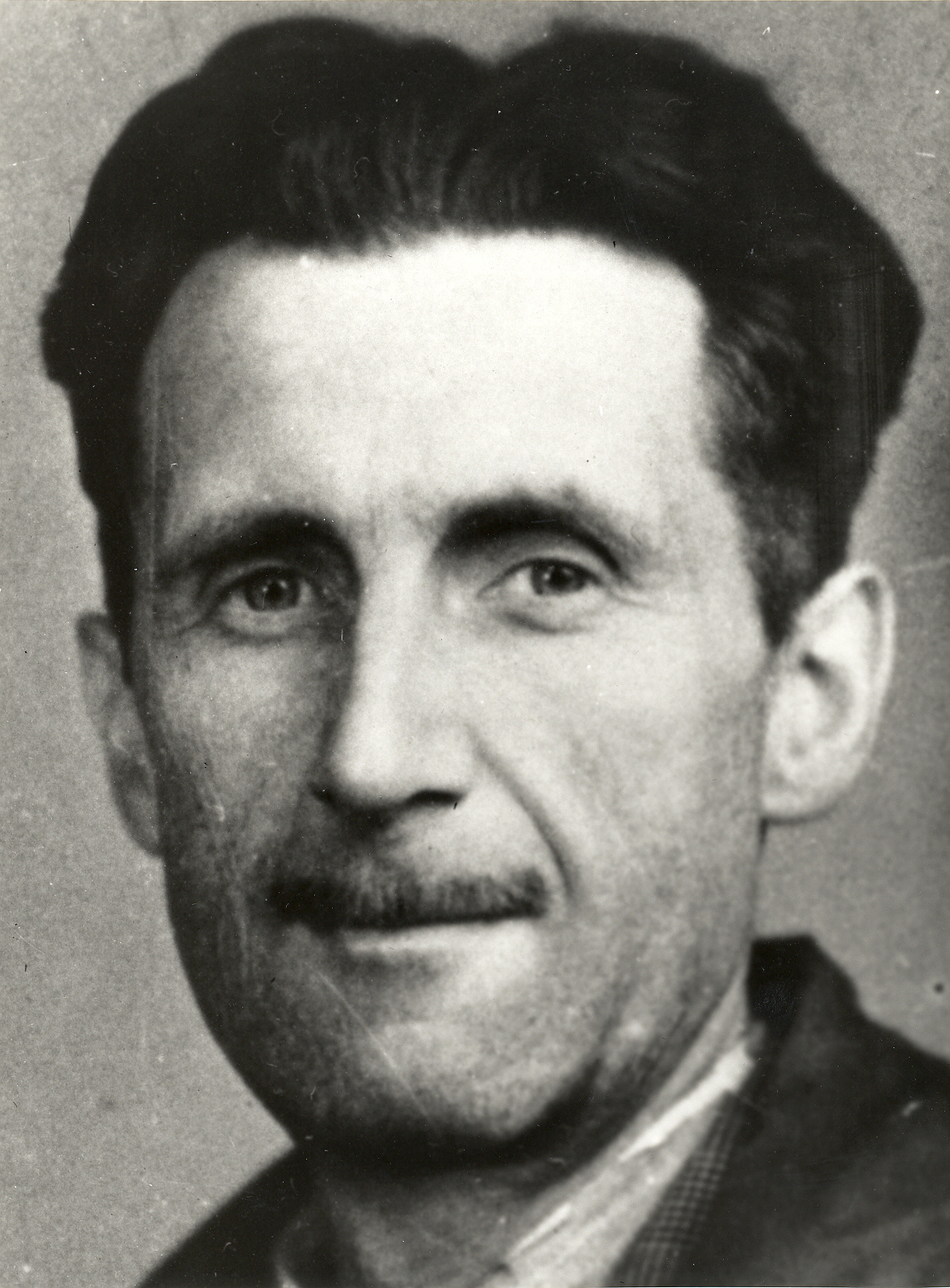
Of course there was nothing glamorous about Wigan Pier with its location in the middle of an industrial town.  This is probably why author George Orwell used it for the title of his book The Road to Wigan Pier.  The book was a dark account of how Britain’s poor lived and worked in the 1930s.  Although Orwell didn’t paint a pretty picture of the area or the conditions, he is said to have liked the people.


The original wooden jetty was demolished around 1929.  It was at the end of a narrow gauge railway which ran from one of the 1,000 collieries in the area to the water’s edge.  Nowadays there are no collieries and factories on the canal banks have been converted to housing.  The canal itself is only used for pleasure boats nowadays.

Interesting fact: Other writers who commented on the town are 17th Century travel writer Celia Fiennes and Bill Bryson who also writes about travel, language and science.

Northern Soul
During the 1960s and 70s Wigan was the heart of Northern Soul or at least its ‘spiritual home’.  Wigan Casino was voted the best disco in the world by American music magazine Billboard in 1978.  Northern Soul was a music genre that originated in the north and was heavily influenced by 1960’s Motown.  Dance styles inspired by it include Disco and Break Dancing.

Interesting fact: Soft Cell’s 80’s hit Tainted Love was originally recorded by a Northern Soul artist.  Other more recent artists to have been influenced by Northern Soul include Moloko, Duffy and Plan B.

Hearing the vibe
If you can’t enjoy music as you’d like to or if listening to too much loud music at concerts is the downfall of your current state of hearing, have you considered having your ears checked?  At Castle Hearing Aids we can test and assess the state of your hearing and by using digital hearing aids, help to improve your capacity.
Don’t stay out in the cold any longer, let us help.  Get in touch today either via our online form or give us a call on 01782 698090