Showing posts with label digital heating aids. Show all posts

Wednesday, 8 May 2013

Digital Hearing Aids Sale –Greater Manchester Digital Hearing Aids


Digital Hearing Aids Sale –Greater Manchester Digital Hearing Aids

When a large sprawling city like Manchester continues to expand you will find a host of suburbs – like satellite villages – scattered around the larger conurbation.  Sale is just over 5 miles from the heart of Manchester and is one such ‘village’.  Not surprisingly it serves as a commuter town for Manchester.

Until the reorganisation of boroughs, Sale was in Cheshire which again goes to show how Greater Manchester is spreading.  It wasn’t always so for Sale.  Originally Sale was a ‘township’ linked to nearby Ashton upon Mersey by a shared church.

Life began in Sale in Roman times as far as we know and was then developed by the Anglo-Saxons.   In fact township is typically Anglo-Saxon as is the name Sale.  It derives from the ancient English Salh meaning ‘next to the sallow tree’.  A sallow tree is a Willow.  Part of the old Roman road joining Chester and York runs through Sale and 46 Roman coins were found in Ashton upon Mersey some years ago.  There is no official mention of Sale anywhere until the 12th–13th Centuries, after the Domesday Book.


Sale and Ashton upon Mersey were rural agricultural towns producing enough fresh veg and corn to support them and farming cattle, which were sold to the lords of the local manors.  Like the development of many parts of this area, it was the arrival of the railways and the canals that changed everything.  Once the railways were built in the 19th Century, Sale became a popular place of residence for the middle class business men who could by then afford to move out of Manchester.  As Sale grew, it swallowed up Ashton upon Mersey which is now a district of Sale.

As well as agriculture as Sale’s main source of income, the area was known for producing ‘Garthweb’, a woven material used to make girths to keep horse saddles in place.  In latter years Sale’s economy relies mainly on service industries.

Friends, Romans or Sale locals and countrymen ...
... lend me your ears or your ear-trumpets!  Actually if hearing our call is difficult then all the more reason to read on.  Many of us suffer with failing hearing as we age but it isn’t only the older generation who suffer this way.  Hearing impairment can be caused by simple things such as earwax to continual exposure to very loud noise and age-related problems.  Whatever the cause, we are in the position to help you to improve your hearing.  If you’d like to know more, take a look here and then get in touch on 01782 698090.

Sale Sharks and the oldest rule book
We know Sale is near the Mersey but we are not aware of any sharks being spotted.  That’s unless you’re talking about the rugby kind!  Sale has one of the oldest Rugby Union Football Clubs in the country.  It dates back to 1861 and holds the oldest book of rules of the game still in existence.  This dates from 1865.

Sale Rugby Union Football Club is an amateur club playing at the Heywood Road grounds in the town.  The grounds are also used by two other clubs: Ashton upon Mersey and Trafford Metrovick Club.  Sale Sharks is the professional arm of Sale Rugby Union Football Club who still use the ground to practice, even though Stockport is their ‘home’ ground now.

The Sharks are renowned for bringing on a number of players in their junior team the Jets.  These include England players Steve Hanley, Mark Cueto, Dean Schofield, Chris Jones, Andy Titterell, Charlie Hodgson and Jason Robinson.  Many went onto to play for the Sharks too.


People of note connected to Sale
With its close proximity to Manchester it isn’t surprising that Sale had many connections with a number of famous or notable people over the centuries.

• One of Sale’s earliest recorded connections is to John Collier a caricaturist and satirical poet who went by the name of Tim Bobbin

• 18th Century physician Dr Charles White founded the Manchester Infirmary.  He lived in Sale

• John Brogden was a 19th Century industrialist who had experience in the coal and iron mining businesses and in cleansing.  He lived in Sale and was a contractor for the construction of the local railway bringing growing prosperity to the town

• Businessman and banker Samuel Brookes owned nearly 25% of Sale during the 19th century

• Samuel was closely followed by his son William who inherited his land in Sale and became MP for Altringham

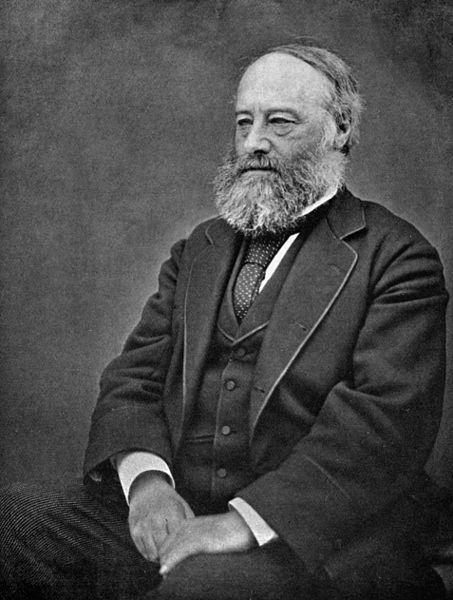
• James Prescott Joule moved to Sale later in life.  He is known for developing the ‘first law of thermodynamics’


• Born in Ashton upon Mersey William Stanley Houghton became one of the Manchester School of playwrights.  His best known play was Hindle Wakes, the story of a mill worker who embarks on a ‘dirty weekend’, which caused quite a stir in its time

• Meanwhile author Dodie Smith grew up here.  She is most famous for writing The Hundred and One Dalmatians.  She also took a turn at acting in her early career and published other novels including the charming ‘I Capture the Castle’

• Lancashire CC and Cambridge University cricketer Joseph Makinson lived here in his later years; as did Cyril Washbrook who played for England and Lancashire CC.  William Taylor who played for Worcester County Cricket Club was born here

• Famous Oscar winning screen writer Robert Bolt was brought up in Sale.  Two of his most famous screen adaptations are Doctor Zhivago and A Man for All Seasons.  He also collaborated on the screenplay for Laurence of Arabia supplying most of the dialogue

• Peter Tinniswood made a name for himself as a comedy script writer for TV and radio and also for authoring a number of cricket-based novels.  He is well known for his work on ‘That Was The Week That Was’, ‘The Frost Report’ and ‘The Dick Emery Show’ amongst others all for TV

• Another local is Marc Riley who presented the Radio 1 Breakfast Show and now presents Radio 6‘s evening show.  Did you know he used to be guitarist with The Fall?

• Famous singer/songwriter David Grey lived in Sale before moving to Wales as a child

• Olympic gold medallist sprinter Darren Campbell was brought up here, as was 800m Commonwealth gold medallist Diane Modahl

• Phil Jagielka, the England and Everton footballer was born here


• Finally a word for Karl Pilkington who was also born in Sale – he is a writer, producer and actor who has worked closely with Ricky Gervais

Calling all current residents
If you currently reside in Sale you are not a million miles from Castle Hearing Aids in Stoke on Trent.  In fact less than 40 miles and just under an hour’s drive.  So if you are concerned or know that you have a hearing problem, we can help.  You can come to us or we can organise a professional audiologist to come to you.  His tests will show how digital hearing aids can help you.

Don’t hang around, make a call today and we can sort it out in no time at all.  Our number is 01782 698090.

Monday, 8 April 2013

Digital Hearing Aids Wigan – Greater Manchester Digital Hearing Aids


Digital Hearing Aids Wigan – Greater Manchester Digital Hearing Aids

If you come from Wigan, did you know that you share your home with Heinz Baked Beans, The Verve and Wigan Pier and that Wigan Warriors were one of the founding members of the Northern Rugby League?

Well listen up all you pie-eaters and we’ll tell you the stories of these iconic links to Wigan.  If you aren’t hearing us too well, we know somewhere that can help – see here.  Yes if you have hearing problems that may have been caused by a number of reasons, we know that our team at Castle Hearing Aids can help.  Please get in touch by calling 01782 698090 to book a hearing test or make an enquiry.

Pie eaters
This local term for people from Wigan has nothing to do with their consumption of a local delicacy.  It dates back to the General Strike in 1926, when hunger forced local miners back to work before the strike was finished.  They were said to have eaten humble pie.

Since 1992 Wigan has held a World Pie Eating Championship as a tribute.  In 2005 the winner ate seven pies in three minutes.  However, government guidelines about Health & Safety caused a change in the rules the following year with the award going to the person who ate a pie in the shortest amount of time.  The reigning champion, Paul Gott ate his in 12.91 seconds in 2012.

Beanz means Heinz
We’ve all grown up eating baked beans.  The brand name Heinz like Hoover is almost a generic term for baked beans generally.


Although they were first produced in the United States in 1901, they very quickly gained popularity once they were introduced over here.  Fortnum and Mason was the first store to stock them also in 1901.  It was a few years later that factories in the London area were set up to produce them.  But it wasn’t until 1946 that production moved to Wigan.  Now it is the biggest food production site in Europe producing 1 billion cans of beans every year.

During the Second World War baked beans were classed as an essential food for rationing purposes.

Did you know that a lorry full of baked beans recently crashed and shed its load on the M6?  Fortunately no beans were harmed during the incident!

Interesting facts: Beecham’s Pills were first manufactured by Thomas Beecham in Wigan and Michael Marks opened a penny bazaar and warehouse in Wigan in the 19th Century and went on to found Marks & Spencer.

The Verve
The 90’s band The Verve met and formed at Winstanley Sixth Form College in Wigan.  The initial line up was Richard Ashcroft, Nick McCabe, Peter Salisbury and Simon Jones.  Simon Tong, a school friend of Richard Ashcroft, joined them later.

They were popular on the ‘indie’ scene at first, moving more mainstream with their third album, Urban Hymns and the release of the single Bitter Sweet Symphony which was a worldwide hit.  The release of a second single from the album, The Drugs Don’t Work gave them their first UK no 1 single.


The band split for the second time in 1999 and are all pursuing other career paths.

Interesting fact: Wigan is also home to Starsailor and Limahl from 1980’s band Kajagoogoo, as well as folk-rock band The Tansads.

Wigan Warriors
Wigan Warriors who play in the Super League currently hold the League Leaders Shield.  The team also holds the accolade for being one of the founding members of the Northern Rugby Football Union in 1895.


This was the breakaway group from the Rugby Football Union.  The reason was all to do with money.  The Rugby Football Union insisted that the sport kept its amateur status and would not pay the ‘broken time’ payments for players missing work.  There was a big north/south divide over the matter.  Most of the northern players were working class and could not afford to take time off work without pay.  In the south it was argued that the sport was more middle class and players could afford to take the time off without compensation.  There was also concern that there were more southern players on the board which met in London, again making it difficult for northern players to be a part of it.

Wigan Warriors were one of 20 clubs which came out in support of Huddersfield who broke away first.

The club was founded in 1872 by members of the local cricket club and are the most successful rugby league club in the UK.  They have won many accolades over the years, some of them several times, including being World Cup Champions three times.  They play at the DW Stadium which has a capacity for more than 25,000.

Wigan Pier
Wigan Pier was once just a music hall joke for a wooden jetty, where the coal was loaded onto boats on the Leeds and Liverpool Canal at Wigan.


The term Wigan Pier, which is ironic, is thought to have been coined by George Formby Senior on the Music Hall stage and continued by his son, the ukulele playing George Formby Junior.  The term certainly stuck.  Now it is the name for the area at the bottom of the Wigan locks on the canal.

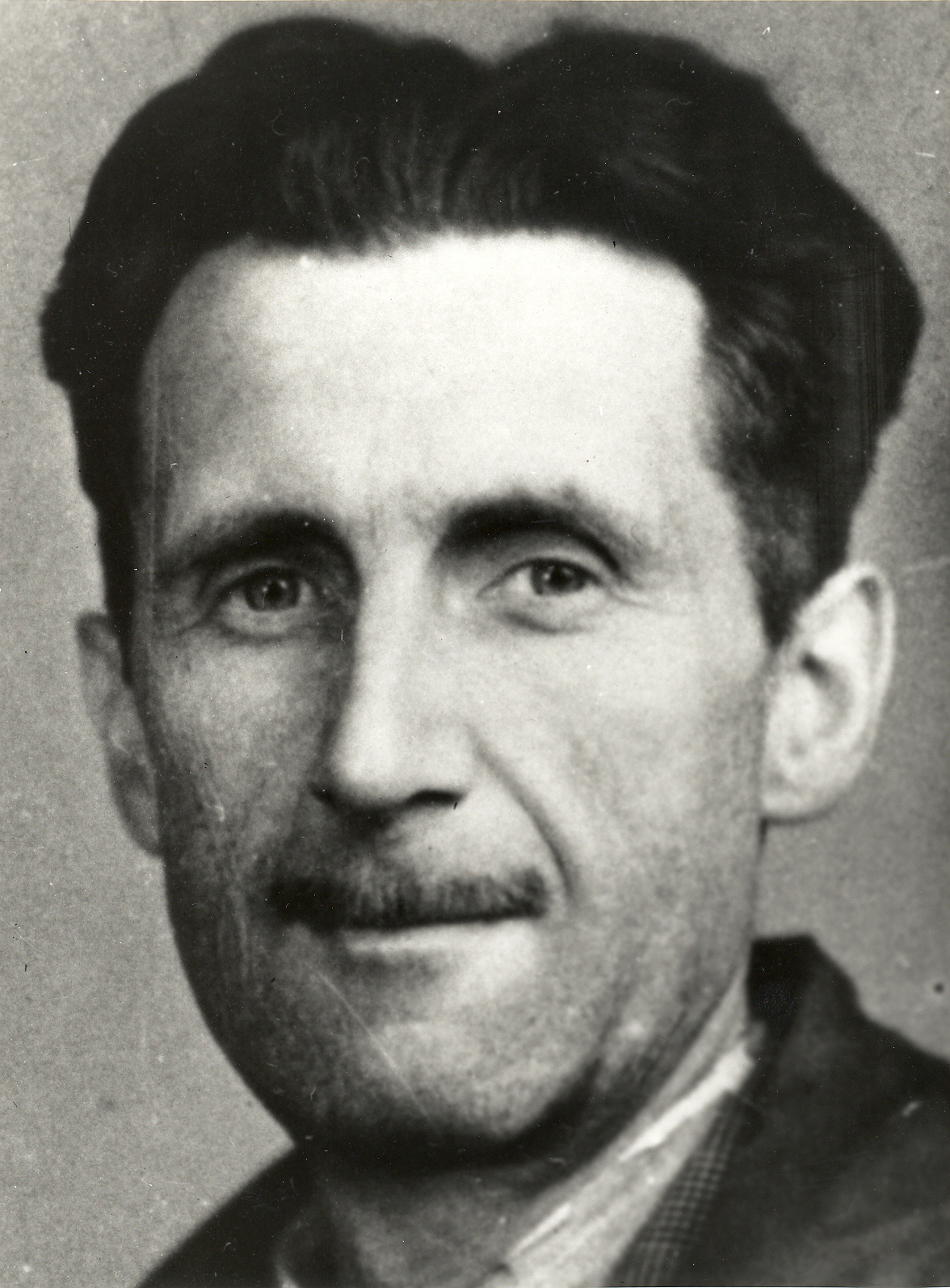
Of course there was nothing glamorous about Wigan Pier with its location in the middle of an industrial town.  This is probably why author George Orwell used it for the title of his book The Road to Wigan Pier.  The book was a dark account of how Britain’s poor lived and worked in the 1930s.  Although Orwell didn’t paint a pretty picture of the area or the conditions, he is said to have liked the people.


The original wooden jetty was demolished around 1929.  It was at the end of a narrow gauge railway which ran from one of the 1,000 collieries in the area to the water’s edge.  Nowadays there are no collieries and factories on the canal banks have been converted to housing.  The canal itself is only used for pleasure boats nowadays.

Interesting fact: Other writers who commented on the town are 17th Century travel writer Celia Fiennes and Bill Bryson who also writes about travel, language and science.

Northern Soul
During the 1960s and 70s Wigan was the heart of Northern Soul or at least its ‘spiritual home’.  Wigan Casino was voted the best disco in the world by American music magazine Billboard in 1978.  Northern Soul was a music genre that originated in the north and was heavily influenced by 1960’s Motown.  Dance styles inspired by it include Disco and Break Dancing.

Interesting fact: Soft Cell’s 80’s hit Tainted Love was originally recorded by a Northern Soul artist.  Other more recent artists to have been influenced by Northern Soul include Moloko, Duffy and Plan B.

Hearing the vibe
If you can’t enjoy music as you’d like to or if listening to too much loud music at concerts is the downfall of your current state of hearing, have you considered having your ears checked?  At Castle Hearing Aids we can test and assess the state of your hearing and by using digital hearing aids, help to improve your capacity.
Don’t stay out in the cold any longer, let us help.  Get in touch today either via our online form or give us a call on 01782 698090

Friday, 8 February 2013

Digital Hearing Aids Nottingham –Nottinghamshire Digital Hearing Aids


Digital Hearing Aids Nottingham –  Nottinghamshire Digital Hearing Aids

Nottingham is probably best known for its connection with the legendary Robin Hood and all his adventures or its textile industry particularly the manufacture of lace.

Of course there is much more to this Midlands city.  It was granted its city charter during the year of Queen Victoria’s Diamond Jubilee more than 100 years ago.  It’s also one of the ‘big eight’, the English Core Cities Group which includes Manchester, Birmingham, Liverpool, Sheffield, Leeds, Newcastle and Bristol.  This group promotes the role of cities particularly in economic growth.

Nottingham certainly sets a good example with a thriving economy, as a tourist magnet and centre of sports.  It has a National Ice Centre and a National Water Sports Centre, Trent Bridge - a Test Cricket Ground and two Football teams, Nottingham Forest and Notts County.

Snotingham, the beginnings of a name
In Saxon times, the settlement in what is now known as the Lace Market was literally the place of Snot’s people, Snotingham.  Snot was the Saxon chieftain!

Nottingham is built on sandstone which is incredibly soft.  As a result beneath many of Nottingham’s buildings there are man-made caves.  These have been used periodically over the centuries as places of work, homes for the poor and air-raid shelters in World War II.  Now they are preserved and open to the public so that visitors can see an old tannery and more.

The Lace Market
Nottingham became well known for its lace manufacture.  Lace net frames, initially in homes, were operated by hand usually by the man of the house whilst women and children did the finishing and the embroidery.  Later factories were built to house steam driven machines.

The Grade II listed Adams Building in Nottingham at the heart of the Lace Market was a lace warehouse and showroom.  Here buyers came to see lace brought in from surrounding factories.  Much of the lace was also finished here.  The building is now part of New College, Nottingham.


Image the noise of the machines in those factories.  That continuous noisy environment must have affected the hearing of many of the workers.  If you find yourself in a similar modern-day environment where noise is or has affected your hearing, find out how Digital Hearing Aids can help by reading the information here or calling them on 01782 698090.

The legend of the good robber
You can’t think of Nottingham without thinking of Robin Hood and his Merry Men.  It is difficult to say whether Robin Hood actually existed. He is certainly mentioned in early ballads dating back to the 12th Century but ballads are handed-down, word-of-mouth history and often mix-up several stories.  Regardless the story of do-gooder Robin Hood is associated with Nottingham not least because of the Sherriff of Nottingham and Sherwood Forest which play parts in the legend.

It’s a good story to be associated with, an ordinary man or a gentleman of land whose lands have been confiscated steeling from the rich to give to the poor.

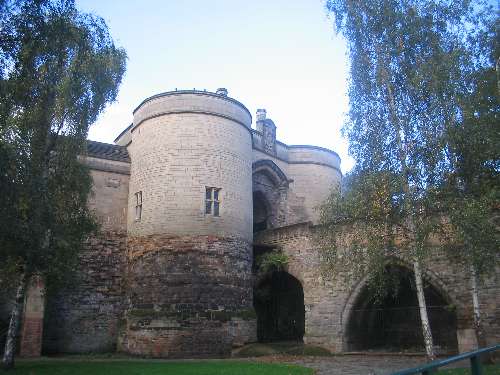
Nottingham Castle
There has been a castle in Nottingham since Saxon times although subsequent ruling bodies and kings have made changes to the castle.  Probably the first stone castle was built in the reign of Edward II.  The 2nd Duke of Newcastle in the reign of Charles II started the building of the current mansion that replaced all previous structures at the castle.  Several Kings and Queens used it as their main home, King John whilst his brother Richard II was away at the Crusades, Edward III, Queen Joan wife of Henry IV and so on.


Perhaps it is still best known from the Robin Hood legends as the place where the Sherriff of Nottingham and Robin Hood met to sort their differences at the end of many of the tales.  You can visit the museum at the castle now to learn about Nottingham’s historic past.

Sherwood Forest, Robin Hood’s ‘home’
Today Sherwood Forest is a National Nature Reserve; once it was part of a huge Royal hunting park.  Now it isn’t noblemen riding through the forest for sport but tourists who are the most prolific visitors.  Up to 500,000 visitors come to see this forest mainly as a tribute to Robin Hood!

It is of course home to the ‘Major Oak’ renowned as the hang out of Robin and his gang of green-clad followers.  The Park hosts an annual Robin Hood Festival and right in the heart of the forest there is an Arts & Crafts Centre with art studios and a programme of year-round events too.

Famous faces of Nottingham

·         Robin Hood and the Sherriff of Nottingham – from the legends of Robin Hood

·         D H Lawrence – prolific author and poet with works recognised as part of England’s ‘canon’ of literature


·         Alan Sillitoe – author, poet and essayist who wrote Saturday Night and Sunday Morning and the Loneliness of the Long Distance Runner

·         Olympic gold medallist skaters Christopher Dean and Jane Torvil – now hosting Dancing on Ice


·         Peter Taylor – Football player and manager best known for his partnership with Brian Clough

·         Jay McGuiness – from boy-band The Wanted

·         Ian Paice – drummer with Deep Purple

·         Bruce Dickinson – lead singer with Iron Maiden

·         Stereo MCs – founders Nick Hallam & Robert Birch came from Nottingham

·         Paul Smith – fashion designer


·         Ed Balls - MP


The Film Mecca of Nottingham
Nottingham has become a favourite setting for films and TV.  Some well known celluloid adaptations have used this destination including

The 1960’s
·         Saturday Night and Sunday Morning

·         The Loneliness of the Long Distance Runner


The 2000’s
·         This is England

·         Control – about Joy Division’s lead singer Ian Curtis

·         We Need to Talk about Kevin

·         The Dark Knight Rises – Wayne Manor is actually Wollaton Hall


If you are put off going to the cinema because of your difficulties hearing, you should look at how Digital Hearing Aids can help you.  No need to miss out on all the cultural fun especially when it has links to your home town.  Give them a call on 01782 698090 or contact them online today.

Sunday, 13 January 2013

Digital hearing aids Chesterfield - Derbyshire digital hearing aids


Digital hearing aids Chesterfield - Derbyshire digital hearing aids

Chesterfield has a population of 71,000 and is situated just 24 miles North of Derby. Originally the area held an Iron Age fort, but this was replaced by a Roman site in around 70AD and it is on this site that the town now stands. During the Middle Ages the towns’ main industry was wool making and it also had an important leather industry. Chesterfield market was awarded its Market Charter in 1204 and these days it holds around 250 stalls, making it one of the largest open air markets in Britain. You’ll be sure to grab a bargain, even if you aren’t in the market for wool or leather! The Domesday Book records of 1086 show the town as being called ‘Cesterfield’, meaning ‘open field’, which perhaps suggests it has always been a successful market town.


If you prefer sport to retail therapy then why not watch a match at Chesterfield’s Proact Stadium? Home to Chesterfield F.C or ‘The Spireites’, the stadium holds 10,500 people and cost 13m to complete. The club gained its nickname  ‘The Spireites’ from Chesterfield’s world famous landmark the Crooked Spire which stands on top of the Church of St Mary and All Saints, a predominantly 14th C church. The spire stands 70m high and leans 2.89m South West, with the spiral twisting 45° West to East. Folklore has it that a blacksmith mis-shod the Devil who then leapt over the spire in pain, knocking it out of shape. More realistic theories suggest different reasons for the unique shape of the spire; the absence of skilled craftsmen, the use of unseasoned timber and insufficient cross bracing have all been put forward, although we prefer the Devil theory!


Football isn’t the only sport that the people of Chesterfield like to get involved with. Clayton’s of Chesterfield are a leading cricket ball manufacturer, supplying balls for test match cricket and famous sportsmen such as Thomas Gascoyne, Nigel Illingworth and John Lukic were born and raised in the town.

Match of the day!
If you like to keep on top the latest sports news but struggle to hear the scores on the radio don’t worry, we’re here to help. Many peoples hearing is impaired, but with our help you’ll soon have no problem keeping up with the game, regardless of the sport you follow.

Our expert team knows exactly how to help you, so why not get in touch with us on 01782 698090 to find out about our free audiology tests.  You can also read more here.

Don’t be afraid, you don’t have to suffer in silence and there are many reasons why a digital hearing aid might benefit you in your daily life. So get in touch today, and find out how we can help you hear things a little more clearly.

All aboard!
The town benefitted greatly from the building of the Chesterfield line that began in 1837 and provided transport links to London, Newcastle and Edinburgh among other places. George Stephenson, the ‘father of railways’ himself oversaw the project and liked the town so much he stayed in Tapton House until his death in 1848.

His body is interred under the altar at Holy Trinity Church and in 2006 a statue was erected in his honour outside Chesterfield Railway Station.

And a ram in a pomegranate tree!
Ok, so it’s not the traditional Christmas carol but Chesterfield’s crest really does depict a Derby ram and a pomegranate tree. The ram represents the towns’ location and the stylised pomegranate tree shows the towns’ loyalty to the crown. A mural crown in the centre of the crest declares the towns’ borough status and the cock bird and pynot, or magpie; represent those who met to conspire against James II at the Cock and Pynot Inn, now Revolution House, in 1688.

Chesterfield’s motto is ‘aspire’, a punning reference to its most famous landmark.

Fancy a pint?
Chesterfield boasts one of Britain’s oldest public houses, The Royal Oak, and the rest of the nightlife isn’t bad either! Noted for the variety and number of venues in a reasonably compact area the town has it all, from bars and restaurants to nightclubs and theatres.

In 2006 the Campaign for Real Ale (CAMRA) hosted the first ever international gluten free beer festival as part of the towns’ regular beer festival.

And whether you want pop tunes or classical music the multi-purpose Winding Wheel is the place to be. This venue has hosted stars such as Bob Geldof, The Proclaimers and Patrick McGinness. The Chesterfield Symphony Orchestra also performs concerts here three times a year.


Famous faces of Chesterfield
• Steven Blakely – Heartbeat actor
• Pete Dodd & Jon Podgorski – members of 1980’s band ‘The Thompson Twins’
• Simon Groom – former Blue peter presenter
• Rik Makarem – Emmerdale actor
• Jason Statham – Hollywood star and former champion diver
• Mark Webber – guitarist in Pulp

It’s amazing the things you can find using the internet these days, but if you’d struggle to hear a documentary about Chesterfield’s history then maybe it’s time to get your hearing checked. Our friendly team are here to help and you can read more about what we do simply by clicking here.

Give us a call today on 01782 698090 and look forward to a brighter, clearer future.