Showing posts with label staffordhire hearing aids. Show all posts

Wednesday, 30 January 2013

Digital hearing aids Walsall - Staffordhire hearing aids


Walsall is a large industrial town, located in the West Midlands and historically a part of Staffordshire. With a population of 170,994 it has grown enormously from its village origins before the Industrial Revolution.  The town was originally known as ‘Walh Halh’, or ‘valley of the Welsh speakers’. It is first mentioned in 1002 as ‘Walesho’, although was left out of the Domesday Book, probably the result of a clerical error. Walsall’s weekly market began in 1220 and the town became known as ‘the town of a hundred trades’, a reference to nearby Birmingham which has been called ‘the city of a thousand trades’.

The Industrial Revolution had an enormous impact on the area, with the population rising from 2000 to 86,000 in just 200 years. Now that’s a lot of mouths to feed! Local workers embraced the modern world and manufactured a wide range of products including saddles, machinery and plated ware. A nearby limestone quarry also helped to boost the local economy.

Leather manufacturing has won the town international recognition. Walsall still supplies the Queen with handbags, the Royal family’s saddles and leather goods for the Prince of Wales. In fact, Walsall is the traditional home of the English saddle manufacturing industry, so get ready to saddle up!


The leather manufacturing industry is ingrained in Walsall’s history. It’s also the reason why the local football club is known as ‘The Saddlers’. The club was founded in 1888 when Walsall Town F.C and the Walsall Swifts F.C merged. The club currently plays at League One level.

Ride ‘em cowboy!
Horse racing was held in Walsall throughout the 19th Century, and a day at the races is exciting for young and old alike. However, if you’d have trouble hearing the race results over the tannoy; perhaps it’s time to think about digital hearing aids.

There could be a number of reasons why you’re suffering with impaired hearing, but don’t worry. Our expert team is here to help and we also offer a free audiology test. If you’d like to know more please call us on 01782 698090, or go to our website today.

See the light!
Walsall Arboretum was opened in May 1874 by the wealthy Hatherton family, who hoped the park would provide the local community with a recreation facility and divert their attention from ‘dogfights, bull baiting and cockfights’. The arboretum featured attractions such as, two boating lakes, tennis courts, an outdoor swimming pool, and later, a children’s play area and paddling pool. Seven years later the local council took over the running of the arboretum and in 1957 the Walsall Illuminations began. Originally these were just simple white bulbs in the trees as an attraction for courting couples, but during the 1960’s more lights were purchased from the famous Blackpool Illuminations. Eventually the attraction had over 60,000 bulbs and took a year to plan.

Unfortunately the Illuminations stopped in 2009 as visitor numbers never rose about 250,000 per year. The light creations have been replaced with laser shows and concerts held throughout the year. The arboretum also hosts a number of events such as a ‘park run’, community weight loss programme and ‘Peregrine’ watch scheme.

A fresh lick of paint!
In 2000 the New Art Gallery Walsall, or the E M Flint Gallery opened. The gallery was named in memory of Ethel Mary Flint, head of art at Queen Mary Grammar School, former Mayor of Walsall and exhibitor at the Royal Academy. The gallery boasts a fine collection of works from artists including Jacob Epstein, Van Gogh, Monet, Turner, Renoir and Constable. You can also view a number of temporary exhibitions from both local and international artists.


The gallery also hosts a variety of events aimed at families, children and displays young people’s work from the local school and college.

A step back in time!
Walsall is steeped in local history and has two museums to display historical artefacts and educate visiting tourists.  The first museum, Walsall Museum, is primarily focussed on the area’s local history and has a range of objects for visitors to view and one off exhibitions throughout the year. The second museum, Walsall Leather Museum, is dedicated to the thriving leather trade that still operates today.  Tourists can explore a mixture of leather goods and see recreations of leather workshops.You might even see the Queen collecting her latest leather handbag!


Famous faces of Walsall
·         Jerome K Jerome – author, best known for ‘Three Men in a Boat’
·         Martin Davies – ITV weatherman
·         Zoe Dawson – actress, best known for her roles in ‘Doctors’
·         Goldie – drum ‘n’ bass musician
·         Mark Lewis-Francis – gold medallist at 2004 Olympics in 100m sprint
·         Noddy Holder – lead singer in 1970’s rock band ‘Slade’
·         Erin O’ Conner – supermodel
·         Meera Syal – comedienne
·         Bob Warman – ITV news anchor man

Keeping up with the local and international news is a part of daily life, but if you have to turn the television volume right up, or switch on the subtitles, it might be time to think about digital hearing aids.
Our friendly team are ready and waiting to discuss your needs. To discover more about our digital hearing aids, or our free audiology tests, simply go to our website or call us on 01782 698090.

Saturday, 22 December 2012

Digital Hearing Lichfield – Digital Hearing Staffordshire


Digital Hearing Lichfield – Digital Hearing Staffordshire

The most significant visual site in Lichfield has to be the 800 year old, unique three-spired Cathedral.  Lichfield Cathedral is the only medieval one with three spires also known as ‘the ladies of the vale’.


Despite suffering damage during the Civil War, the Cathedral has some magnificent stained glass windows and one of the most complete Closes of all English Cathedrals.  The Cathedral is dedicated to St Chad and St Mary.  Chad was the first bishop here in 669.  The original church on this site was a wooden Saxon one which was replaced by a Norman stone Cathedral and then by the present Gothic one.  Building started in the late 12th Century with the Lady Chapel not completed until the 1330s and the Chapter House later still.  In the Chapter House you’ll find great stone carvings and it holds the Cathedral’s ‘treasure’ the Lichfield Gospels.  These manuscripts date from the 8th century and are illuminated – reminiscent of the Lindisfarne Gospels.

Lichfield Cathedral came under siege three times during the civil war but it took until the 19th Century for restoration work to be completed.


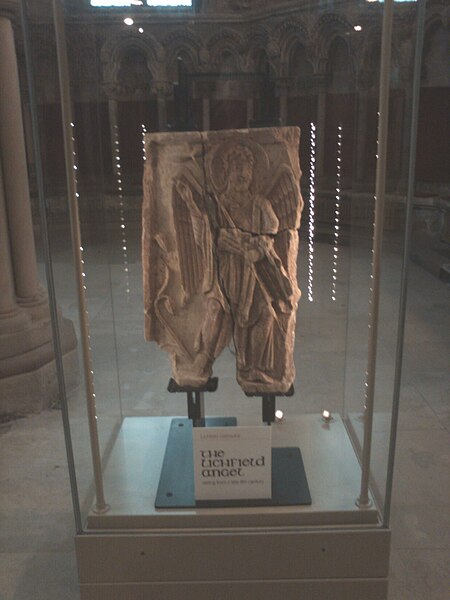
The Lichfield Angel
The Lichfield Angel is a carving of the Archangel Gabriel dating from around 730 AD, the same as the Lichfield Gospels.  It was found as late as 2002 in the nave and thought to be part of the chest that originally contained the relics of St Chad.  It is on display in the Cathedral.


Old relics
Does your difficulty with hearing make you feel like an ‘old relic’ whatever your age?  Certainly hearing impairment can be associated with aging but there are many other causes from genetic, a build up of earwax, working in an extremely noisy environment and more.  Here are Castle Hearing Aids we can assess what the damage is and where possible offer you help to hear better.

Our free at home hearing test is just the start of getting your problem identified and sorted.  The test is simple and conducted by a professional audiologist using headphones and a computer.  Once the diagnosis is received, you can decide how to proceed and if hearing aids are a possibility, we are on hand to advise.

For more information please take a look here or give us a call on 01782 698090 and message us using this online form.

The famous of Lichfield
Charles Darwin’s grandfather lived in Lichfield in the 18th Century.  Erasmus Darwin was a scholar of the time, a practising doctor, scientist and botanist, inventor and poet.  His house in the Close is a now a museum with displays, interactive features and an herb garden.


Writer Samuel Johnson also known as Dr Johnson was from Lichfield; his writings including the English Dictionary have had a lasting influence on English Literature.  He was a celebrity of his time with his writings and actions often reported in the newspapers much as current-day celebrities.  He suffered ill-health in several forms from depression, testicular cancer, gout and was posthumously diagnosed as suffering from Tourette Syndrome.  There is a statue to Dr Johnson in Lichfield’s Market Square.


You can learn more about him at his Birthplace Museum, the house where he grew up now with a Grade I listing.

David Garrick was an 18th Century actor, playwright, theatre manager and producer.   He was born in Lichfield and was a pupil and friend of Samuel Johnson.  His acting style was realistic and both the Garrick Theatre in London and in Lichfield are named after him.

The poet Anna Seward lived most of her life in Lichfield.  There is a plaque dedicated to her in Lichfield Cathedral.

Elias Ashmole politician, astronomer and astrologist came from Lichfield.  He founded the Ashmolean Museum in Oxford.

Joseph Addison co-founder of the Spectator Magazine grew up in Lichfield after his father was made Dean.

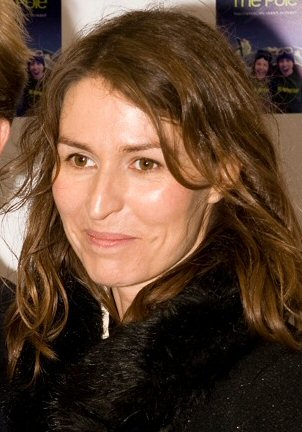
Actresses Helen Baxendale, Sian Brooke, singer Siobhan Dillon, Richie Edwards bass player with The Darkness and Stone Gods, Phil Ford TV writer noted for 2012 Dr Who, Bryn Fowler bassist with The Holloways, all hail from Lichfield.


Sportsmen with connection to Lichfield include professional golfer Robert Rock, motor cycle racer Gary Mason, Matt Murray one time goalkeeper for Wolverhampton Wanderers and Adam Christodoulou, British Racing Driver.

Historic buildings
We’ve touched on a few, but Lichfield has 230 listed buildings including some good examples of Georgian architecture.  Here are a few of them:
·         The Lichfield Clock Tower - this tower is Grade II listed and dates from the 19th Century.
·         Lichfield Heritage Centre – housed in an old church, it shows off 2000 years of Lichfield history.
·         The Bishops Palace – this Queen Anne style building replaced the original mediaeval one which was built in the 14th Century.  The building is now used by Lichfield Cathedral School
·         The Hospital of St John – was once an ancient chapel and is now a care home.


·         There are a number of houses in the Close which are Grade II listed
·         The George Hotel and the Angel Croft Hotel are both Grade II listed

The Letocetum Roman site and museum
Owned by the National Trust this site was once a Roman fort of some significance.  It soon developed into a settlement and grew into a Roman-British town conveniently placed along the Roman Watling Street.  It became a staging post for travellers.  When you visit it now you can take guided tours of the site to see what it would have been like in Roman times.  The museum here houses exhibits of Roman archaeology found on site.

The Staffordshire Hoard
3,500 pieces of Anglo-Saxon silver and gold metal work were discovered in a field near Lichfield in 2009.  There are plans to have part of it on display at the Cathedral.

Hard of hearing
For those of you with any kind of hearing impediment, take a good look around our site to learn how we can help you.  Don’t just take our word for it, take a look at what others say in this video.

The next step is easy.  Get in touch with us so that we can explain about our free hearing test and how we can help you.  You can call 01782 698090 or you can message us in privacy.

Thursday, 13 December 2012

Digital Hearing Tamworth – Digital Hearing Staffordshire


Digital Hearing Tamworth – Digital Hearing Staffordshire

The market town of Tamworth in Staffordshire is the second largest town in the county after Stoke-on-Trent.  It takes its name from the River Tame which runs through the town.  Tamworth is very proud of its heritage as the ancient capital of Mercia, home to the King of Mercia.  Mercia was one of the Anglo-Saxon kingdoms covering a vast area which is now known as the Midlands.


Losing not your marbles, just your hearing
If you’re a local with a hearing problem, why not contact Castle Hearing Aids.  Our HQ is just up the road in Stoke-on-Trent.  In fact we can help wherever you are with home visits from a professional audiologist to test your hearing.

Hearing loss can have many causes from a build up of earwax which is easily removed with the right treatment to long-term damage or deterioration.

A hearing test to asses your problem is simple – you just wear a set of headphones and are played a number of quiet sounds so that your hearing ability can be tested.  If the test shows that you have a problem be it mild, moderate or severe, we can take a mould of your ear on the spot to equip you with a hearing aid.

Why not give us a call on 01782 698090 or send us a message here for more information.

Back to Tamworth
Tamworth has several claims to fame from infamous pigs to its castle’s ghostly activities featuring in TV’s Most Haunted Series 3.

The ‘Tamworth Two’
Technically the infamous ‘Tamworth Two’ were not actually from Tamworth, but in fact from Malmesbury in Wiltshire.  The brother and sister duo were of course Tamworth pigs, a breed that originated in Sir Robert Peel's Drayton Manor Estate at Tamworth, but more about him later.
The Tamworth breed was a result of interbreeding of Sir Robert’s original herd with 'Irish Grazers' from Ireland in 1812.  It took until 1865 for the Tamworth breed to achieve English breed recognition.  By 1882 Thomas Bennett of Rossville, Illinois imported Tamworths into the USA; the breed now exists in the UK, USA and Canada.

Back to the ‘Tamworth Two’.  These cunning little piggies made a name or should we say two names for themselves – Butch and Sundance – by escaping a grizzly end at an abattoir in 1998.  On being unloaded from their owner Arnoldo Dijulio’s lorry, the 5 month-old piglets squeezed through a fence and swam across the River Avon to freedom.  Whilst they spent the week on the run, the media and public interest grew.  Reporters arrived from Japan and the American NBC Network to cover the story.  Once the public and media learned the owner still intended to take Butch and Sundance to the abattoir on recapture, they offered huge financial payouts to save the pigs.

We think you’ll agree this is the stuff movies are made of.  In fact the Daily Mail had the foresight to gain exclusive rights to their story by buying the piglets.  They were believed to be worth £40-£50 each.

Thanks to the Daily Mail’s intervention, Butch lived to the ripe old age of 13, dying in 2010 and Sundance to the age of 14, dying in 2011.  They spent the rest of their less eventful lives at the Rare Breeds Centre in Ashford, Kent.  But their memories will live on if the staff has anything to do with it, as they hope to put up a plaque in Butch and Sundance’s honour.

Tamworth Castle
The castle has seen a lot of action over the centuries and played home to many royal families too.  It is now recognised as a Scheduled Ancient Monument, with its buildings being of much historical, archaeological and architectural importance.  Tamworth Castle has what is believed to be the largest and oldest Norman Mottes.  It has a very rare integral square tower and polygonal shell keep, containing a 15th Century open hall with a wide-span tie beam roof.

In Anglo Saxon times covering the period 401 to 1066, there is evidence of a Buhr – a fortified Anglo-Saxon town - containing a site that is thought to be where the reigning King’s palace was built.

During the Medieval times which spanned 1066 to 1485, Robert le Dsipenser, The Lords Marmion and The Freville family lived in Tamworth Castle.  It is thought the original motte and bailey castle was built in 1070 during the period when Robert le Dispenser inhabited the Castle.

In Tudor times dating from 1485 to 1603, Tamworth Castle was the Ferrers’ family abode.  They transformed the castle into a Tudor home, complete with a timber tie-beamed great hall in 1437.  In 1576 during the Stuart period, Lord Humphrey II removed medieval structures from the castle and generally remodelled it to reflect his wealthy status.

When the English Civil War of 1642 to 1649 broke, the castle was garrisoned for King Charles.  However in 1643 the Parliamentarians led by Cromwell laid siege to the castle; after two days it was captured.
Quieter times were in store for Tamworth Castle from 1688 to 1754 with 2 noble families responsible for its keep.  Firstly the Shirleys, followed by the Comptons.  Ironically neither family modified its design or structure in any way or lived at the castle, choosing to rent it out to tenants instead.

The Georgian period from 1714 to 1837 saw George Townshend I inherit the property.  A survey revealed it was in a state of bad disrepair, but it wasn’t until his son George II inherited it that substantial repair and renovation was undertaken.  This included replacing the Tudor windows with Gothic ones and removing the top attic floor of the Elizabethan wing.  As with all castles, the work was not cheap and his estate was declared bankrupt on his death, with the renovation incomplete.

From 1837 to 1901 during Victorian times tenants Miss Hester Wolfestan and later Thomas Cook resided at Tamworth Castle before the Townsend family sold it in 1897.  It was bought by Tamworth Corporation, later known as Tamworth Borough Council for £3,000 and became a museum in 1899.

Today the castle is renowned for its paranormal activity, attracting groups of curious overnight guests and featuring in series 3 of the Most Haunted television show.

The Robin Reliant
Tamworth is also famously the home of the Reliant Motor Company formed in 1935.  The company concentrated initially on building three-wheeled cars.  Later they progressed to the four-2wheeled Scimitar racing cars.  The company closed in 2002.


However, the Robin Reliant has an unenviable place in British culture where it has been the butt of many jokes including those of Jasper Carrott.  Two of the best known Reliants appeared in Only Fools and Horses – the ‘dirty yellow van owned by the Trott brothers’ - and the light blue van which seemed to literally be the ‘butt’ for Mr Bean getting crashed into or tipped over by a mini!

One has appeared in Fifth Gear and Top Gear and reference is made to it in Cars 2.

Notable people from Tamworth
Tamworth isn’t short of the rich and famous through history as we’ve seen.  Here’s a few more:

Thomas Guy though born in London lived here with his mother after his father’s death.  He went onto open a London bookshop and became a bit of an entrepreneur for Tamworth, building Alms Houses and a Town Hall when representing them as MP.  Later he built extra wards for St Thomas’ Hospital in London and acquired some land where Guys Hospital, named after him, was founded and built at the beginning of the 18th Century.


Sir Robert Peel who we already know bred the Tamworth pig is far better known for serving as Britain’s Prime Minister for two periods in the 19th century and even more famously for founding the ‘Peelers’.


Actually the 1,000 strong police constables were also known as ‘Bobbies’ and were employed by Peel when he established the Metropolitan Police Force in 1829 to cut down crime.  This initiative wasn’t popular at the time but within 50 years all cities in Britain had their own Police Forces.  Peel developed the principles by which today’s police force operate.


Julian Cope who was brought up in Tamworth was lead singer with Teardrop Explodes and has continued to make music ever since.  He is also an author of books on archaeology and antiquarianism and has written his autobiography too.


The band Wolfsbane was formed in Tamworth with lead singer Blaze Bayley who went on to form Iron Maiden.

·         Tony Coton, a former Manchester City goalkeeper came from Tamworth

·         Former West Brom player Bob Taylor and Paul Merson (Aresenal and Aston Villa) played for Tamworth FC for a short time.  Other players from Tamworth include Wales International star Ashley Williams, Derby County’s Martin Taylor and Aston Villa’s Marc Albrighton


·         Nuclear physicist Ernest William Titterton was born nearby

·         Children’s book author Julia Suzuki also comes from here

·         Local seaman Colin Grazier rescued important documentation about the German Enigma code and was posthumously awarded a George Cross in WWII

·         The Black Lady, a 9th Century nun, was said to haunt The Lady’s Chamber at Tamworth Castle

Don’t forget
We are here to make life easier for you, to help you hear all about great Staffordshire towns like Tamworth.

If you think we can help your ‘mutt and jeff’ condition, just contact us on 01782 698090 or see here for more information.