Showing posts with label South Yorkshire Digital Hearing Aids. Show all posts

Friday, 15 March 2013

Digital hearing aids Rotherham – South Yorkshire Digital Hearing Aids


Digital hearing aids Rotherham – South Yorkshire Digital Hearing Aids 

Rotherham in South Yorkshire is just less than 50 miles from Stoke on Trent as the bird flies, which means it is in the area for all the Digital Hearing Aid help that residents may need.  If you fear that your hearing is deteriorating, get in touch with us for advice.  Call us on 01782 698090.

All about Rotherham
Although Rotherham has a population of 117,000 it is only 6 miles from another huge conurbation, Sheffield.

The local economy is said to be thriving which is quite an achievement in the current climate.  As proof, Rotherham’s Advanced Technology Park is home to Rolls Royce and Castings Technology International, which provides research and technology for the cast metal sector.  The Advanced Manufacturing Research Centre, part of Sheffield University, is based here too alongside Nuclear AMRC.  The park known as the AMP is also home to the TWI Technology Centre, Performance Engineered Solutions, 3-D Printing company Materialise, technology product manufacturer Arclad, sophisticated laboratory equipment producer Struers and Xeros, the polymer bead cleaning company developed out of the University of Leeds.

You can tell by the type of companies housed at this park that Rotherham’s main concentration is on technology and high profile techniques for the modern world.  Things weren’t always this way of course.

Earlier industry in Rotherham
Industry through the ages in Rotherham and the surrounding area has been about base materials.  Iron ore has been mined in the region since Roman times; coal was the main industry by the time of the Industrial Revolution bringing Rotherham to the fore back then.  This in turn meant that the rivers that define Rotherham, The Don and the Rother also became part of the important Sheffield and South Yorkshire Navigation System.  This connected rivers and canals so that coal, iron and steel could be transported.

The Walker family based in Rotherham, built their iron and steel empire in the area - iron was very important.  Their product was used for many cast iron bridges and also used on HMS Victory.  By the 19th Century there were many local cast iron foundries supplying developments of the time.  Amongst these, the first successful, commercial iron plough was produced in Rotherham by Joseph Foljambe.

In the 18th Century Beatson Clark & Co established a glass works here.  They produced and exported glass medicine bottles.  The company still supplies glass containers to the same industry today.

Grain milling was also a common activity in the area.  In fact Rank Hovis only closed their mill in 2008 – it was the last one in Rotherham.

Historic Rotherham
Rotherham didn’t really come to anything until Saxon times, when it was established as a small market town with market day every Friday and an annual fair.  An extra market day on Mondays was acquired by the monks of Rufford Abbey in the 13th Century, after the local but absent lords gave all their Rotherham possessions to the Abbey.


By the 15th Century the Archbishop of York, Thomas Rotherham, arranged for The College of Jesus to be built in his home town of Rotherham.  His inspiration was the colleges of Oxbridge.  It was the first brick building in the area and taught theology, grammar, writing and singing.  The college alongside the newly built All Saints Church (now Rotherham Minster) gave the town a very modern feel at the beginning of the 16th Century.


Unfortunately the college did not remain open for long.  Its fate around 50 years after it was built fell foul of the monarch Edward VI who dissolved it and took all its assets.  Very little of the old college has survived to the present day, though part of its walls remain encased in other buildings mainly in the still named, College Street.

Landmarks
·         The 15th Century Rotherham Minster is Grade I listed and was referred to as ‘the best perpendicular church in the country’ by 20th Century History of Art expert Pevsner.

·         The Chapel of Our Lady of Rotherham is a ‘bridge chapel’.  This 15th Century chapel built on Chantry Bridge, also erected at the same time, is thought to be one of the best preserved examples in Britain.  There are only three of them that still exist.  It was dissolved in the 16th Century by Edward VI and became an almshouse, a prison and later a shop.  It is now restored to its original use.


·         Chantry Bridge was built to carry Bridge Street over the River Don.  The 15th Century bridge had four arches and was just 15 feet wide.  In the 18th Century it was widened and a fifth arch was added.  In the 20th Century a new bridge – Bridge Street Bridge - was built upstream and Chantry Bridge was restored to its original four arches.  The river is wider than it was in Medieval times so Chantry Bridge no longer reaches the West Bank of the river.

·         On the edge of Rotherham, Clifton Park is the home of Clifton Park Museum, once Clifton House.  Built in the 18th Century Clifton House is a Grade II listed building which was once home to the Walker family.  It is now owned by the Municipal Borough of Rotherham.

·         Grade I listed and Scheduled Ancient Monument, Catcliffe Glass Cone stands as a reminder of glass production in the area.  It is the oldest surviving cone of its type in Western Europe.  There are three similar cones still standing in the UK.


·         At nearby Maltby you can see the ruins of English Heritage’s Roche Abbey.  Originally built as another Cistercian Abbey in Norman times.  It is rumoured that Robin Hood attended mass here.  The Monastery was dissolved by Henry VIII in the 16th Century and saw the start of its demise and ruin.


Rotherham’s famous connections
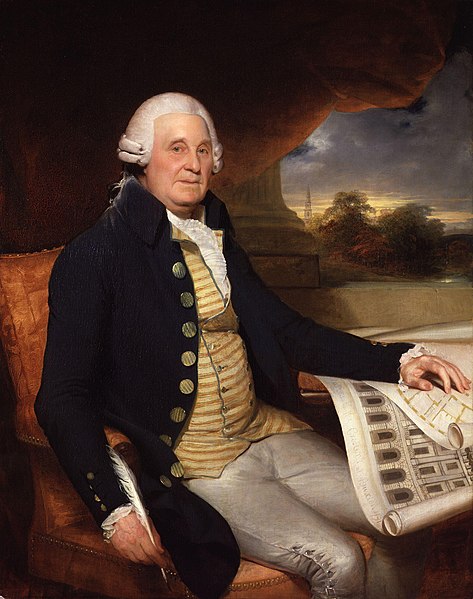
·         John Carr, 18th Century architect from Yorkshire who designed Clifton House


·         Henry VIII and Edward VI for their dissolution of monasteries and churches in the area

·         Robin Hood who attended mass at Roche Abbey

·         William Hague, the First Secretary of State, was born here


·         As was Sir Donald Coleman Bailey who invented the Bailey Bridge

·         Comedians Sandy Powell and the Chuckle Brothers also call Rotherham their home town

·         Lynne Perrie, Coronation Street actress and her brother, comedian Duggie Brown were both born here

·         Actor Dean Andrews and actress Liz White who both starred in Life on Mars,  also come from Rotherham

·         Presenter James May grew up here


·         The talented Christopher Wolstenholme from Muse also calls Rotherham home

·         Retired Arsenal and England goalkeeper David Seaman also hails from Rotherham


Getting checked out
There’s nothing worse than not being able to hear a local hero on the TV whether they are a politician, a comedian, an actor or a musician.  Get your hearing checked out, especially if you think it might be worsening.  We can sort out a professional audiologist to test both ears and advise on aids.  Don’t leave it any longer, contact us today on 01782 698090  for more information.

Thursday, 7 March 2013

Digital Hearing Aids Sheffield – South Yorkshire Digital Hearing Aids


Digital Hearing Aids Sheffield – South Yorkshire Digital Hearing Aids 

Sheffield was big in the production of steel; so much so that its nickname is ‘Steel City’.  With that in mind it seems even stranger that this big industrial town is also thought to have more trees per person than any other in Europe.  The total count or actually estimation is well over 2 million and maybe as high as 2.5 million.

With that many trees in the city of Sheffield, it won’t seem so strange to learn that there are also 83 parks here too.  Four of these parks are ‘public gardens’.  Sheffield is a truly ‘green’ city.

Sheffield Botanical Gardens
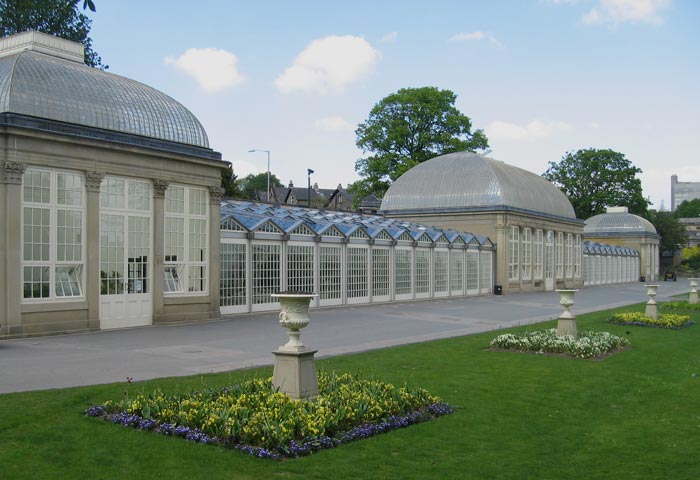
Sheffield Botanical Gardens house 5,000 plants from around the world.  They were first opened in 1836 and were designed by Robert Marnock.  They include what are now Grade II listed glasshouses, which were restored to their former glory in 2003.


You’ll find the national collection of Weigela here; it’s a well known shrub which originates from Asia.  It is also home to the national collection of Diervilla which is closely related to Weigela.  It is a native of North America and was introduced to Europe by a French Surgeon named ... Dierville.  It is also known as Lornicera maackii and more commonly as bush honeysuckle.


Sheffield’s Winter Gardens
The Winter Gardens have been given several accolades – one of the largest temperate glasshouses built in the last 100 years in the UK, the largest urban glasshouse anywhere in Europe, which was opened by the Queen in 2003 and houses more than 2,000 plants.


It also won eight awards for building and design including the Civic Trust’s Green Award, RIBA Millennium Award, RCIS Pro Yorkshire Award for Design and Innovation and several more.

The Peace Gardens
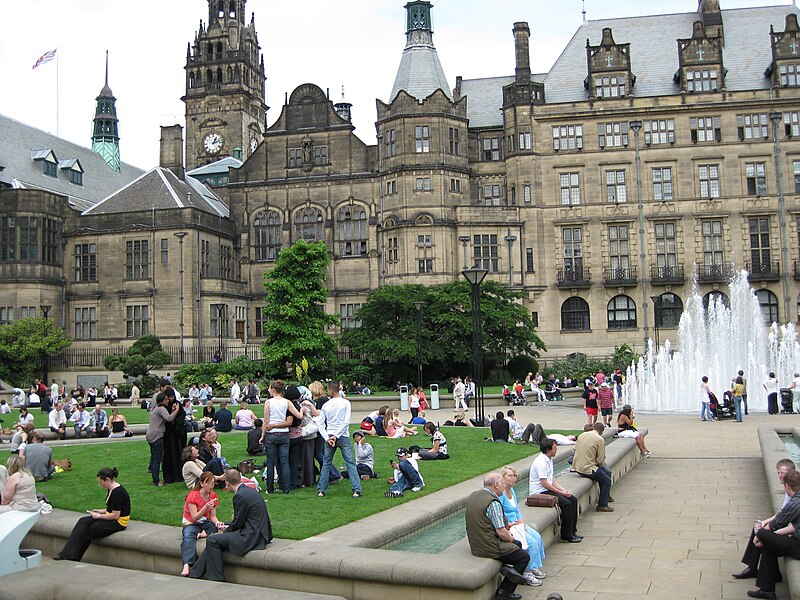
Created as part of the Heart of the City project, the Peace Gardens sit in front of the gothic Town Hall.  The gardens were originally built in 1938 when a church was demolished.


The fountains commemorate both the five rivers which converge in Sheffield and the flow of molten steel which made Sheffield famous.  There are also several monuments and plaques commemorating Sheffield soldiers and civilians lost in several wars – the Spanish Civil War , The Korean War and of course two World Wars.  The Peace Gardens have also won many awards.

Hillsborough Walled Garden
These gardens can be found at Hillsborough Park which surrounds Hillsborough Hall.  The Park was built by the Dixon family who owned the house in the 19th Century.  The Walled Garden is just one part of the park which also has a boating lake and a bowling green complete with pavilion.  The house is now Sheffield library having been taken over by the City Council.  In the 1990s the Walled Garden was dedicated to the memory of the 96 people who lost their lives in the Hillsborough Disaster.


Hillsborough Stadium was the home ground of Sheffield Wednesday FC.  On the day of the disaster, 15th April 1989, the game was an FA Cup Final between Liverpool and Nottingham Forest.  Tragedy struck when an exit gate which had been left open gave access to the crowds waiting outside.  The huge crowd surge caused a crash barrier to break and the disaster that ensued.  The game was stopped just six minutes into play.  As well as the 96 fans who lost their lives, another 766 were injured.

The importance of our senses
As one of your key senses hearing is important.  It alerts you to danger and allows you to take the appropriate action.  Our hearing can be affected by many things some of which cause it to deteriorate.

If you think that yours is less effective than it was, let Digital Hearing Aids help.  We can test to see the quality of your hearing in both ears and if necessary explain how a digital hearing aid could help.  Give us a call on 01782 698090 to discuss.

Steel City
For a place to be nicknamed after its main industry shows it must have been pretty big in that area.  Just to give you an idea of how important steel has been to Sheffield over the centuries, here are the main points:

·         Very early on Sheffield was known for producing knives; Chaucer mentions this in The Canterbury Tales which were written in the 14th Century

·         Sheffield was the main cutlery manufacturer in the UK by the beginning of the 16th Century

·         It wasn’t until the mid 18th Century that the production of crucible steel was discovered, but it allowed for a much better quality of steel to be produced

·         In the same period the technique of silver-plating on copper was discovered and was known as Sheffield Plate

·         By the 19th Century, the Bessemer Process helped to reduce the costs of good quality steel production

·         Steel became the preferred materials for ship building and railway lines

·         The UK supplied the US and Europe during the 19th Century, but by the next century the US and Germany had caught up and we were losing our market share

·         Steel is still produced in Sheffield and is an important part of the local economy

Famous faces
With a population of more than half a million, you’re bound to find many famous faces amongst them.  So here are just a few:

·         Authors Malcolm Bradbury, Angela Carter, A S Byatt, Margaret Drabble and Joanne Harris

·         Michael Palin, famous actor, travel writer and one of the original Monty Python ‘group’ was also born here

·         Charles Boot founder of Pinewood Studios was born here

·         As was the businessman best known as a night club owner, Peter Stringfellow

·         And the clever man who founded Thorntons Chocolates, Joseph William Thornton

·         Actors Sean Bean, Lesley Ash, Donald Pleasance and his daughter Angela and Dominic West hail from Sheffield


·         Patrick McGoohan famous for his lead role in the 1960s TV series The Prisoner grew up here

·         Comedian Eddie Izzard attended the University of Sheffield where he discovered his penchant for comedy


·         Just a few musicians have connections to Sheffield including Joe Cocker, Jarvis Cocker and the band Pulp, Bruce Dickinson of Iron Maiden, Jamie Cook and Matthew Helders of Arctic Monkeys, Joe Elliott of Def Leppard, Martin Fry of ABC, Paul Heaton once of The Housemartins and The Beautiful South, Roisin Murphy lead singer with Moloko, Philip Oakey of The Human League, Martin Ware of Heaven 17 and we could go on ...

And several connected with the steel industry:

·         Manufacturer Benjamin Huntsman who perfected making cast steel i.e. crucible steel

·         Sir Henry Bessemer is remembered for his process – Bessemer Process – for the manufacture of steel

·         Thomas Boulsover perfected silver-plating over a copper base

·         Harry Brearley invented Stainless Steel

Mutt and Jeff
The Cockney Slang for deaf somehow seems a little easier to say than confessing that your hearing is impaired and using the word deaf!  There are many reasons why our hearing can be less effective and none of these are causes for embarrassment.

One thing’s for sure you’ll be pleased if yours can be improved.  So don’t hesitate to give us a call on 01782 698090 for more information or contact us online.